A Well Deserved Pulitzer Prize
Back in November, I wrote a brief review of A Day in the Life Of Abed Salama. Reading that post now, I regret that it was so reserved and devoid of genuine praise. True, Nathan Thrall tells a heartbreaking story, and at this point in my life, I am wary of stories like this.
Nevertheless, it was a terrific book. I had trouble putting it down. I was very deeply moved by it. These people are filled with goodness and kindness; I hated to read about their suffering and prayed for the easing of their pain.
On May 6, it was announced that A Day in the Life Of Abed Salama has been awarded the 2024 Pulitzer Prize for General Nonfiction. I was deeply gratified to find this out. It is such a deserving selection.

The Great American Novels: A List from The Atlantic, My Take, Part Two
[Click here for Part One.]
I was really pleased to see two of my favorite mysteries on this list: The Big Sleep by Raymond Chandler and The Zebra-Striped Hearse by Ross MacDonald. The Chandler title is revered by many crime fiction fans and does not need any additional boost from this list or from me. Nevertheless, it’s great to see it included with the likes of The Great Gatsby, A Farewell To Arms, The Sound and the Fury, The Invisible Man, and other acknowledged classic works of fiction. (But not The Catcher in the Rye, a book which I find irritating and overrated.)

The case of The Zebra-Striped Hearse is another matter. For quite a while now I’ve been singing the praises of Ross MacDonald, a writer whose gifts, to my mind, have not until recently been sufficiently recognized. (And a big thank-you to Library of America for helping to rectify that situation.)


‘MacDonald’s depiction of mid-twentieth century southern California as a land of material riches and moral and spiritual bankruptcy has rarely been equaled. His mix of noir cynicism with an empathetic view of human vulnerability makes for a strangely heartbreaking reading experience.’
(The above is a quote from a letter I wrote several years ago to the Washington Post Magazine.)
I’ve read all of the Lew Archer novels, some of them twice. I began with The Zebra-Striped Hearse and just kept going. Here is a passage I cherish from that novel:
‘The striped hearse was standing empty among other cars off the highway above Zuma. I parked behind it and went down to the beach to search for its owner. Bonfires were scattered along the shore, like the bivouacs of nomad tribes or nuclear war survivors. The tide was high and the breakers loomed up marbled black and fell white out of oceanic darkness.’

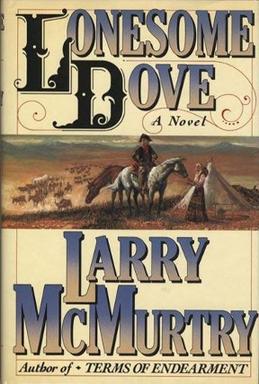
There is one novel that did not make this list, that I strongly feel should be there. That is Lonesome Dove by Larry McMurtry. I was utterly transported by this book. I remember when I finished, thinking to myself, All these years there’s been talk of who would write the Great American Novel. Wikipedia defines it as “… the term for a canonical novel that generally embodies and examines the essence and character of the United States.” Lonesome Dove does that, and then some.
I can never think of this book without recalling the TV miniseries that was based on it. It was brilliant. How could it not be, with a cast headed by Robert Duvall, Tommy Lee Jones, Danny Glover, Diane Lane, Anjelica Huston, Robert Urich, and others?

The Great American Novels: A List from The Atlantic, My Take, Part One
Here’s a link to the list of Great American Novels. The editors have prefaced it with an explanation of how they arrived at these titles.
As I perused the selections, I couldn’t help but categorize them in terms of what I’ve read and loved, tried to read and couldn’t, and just plain haven’t read.
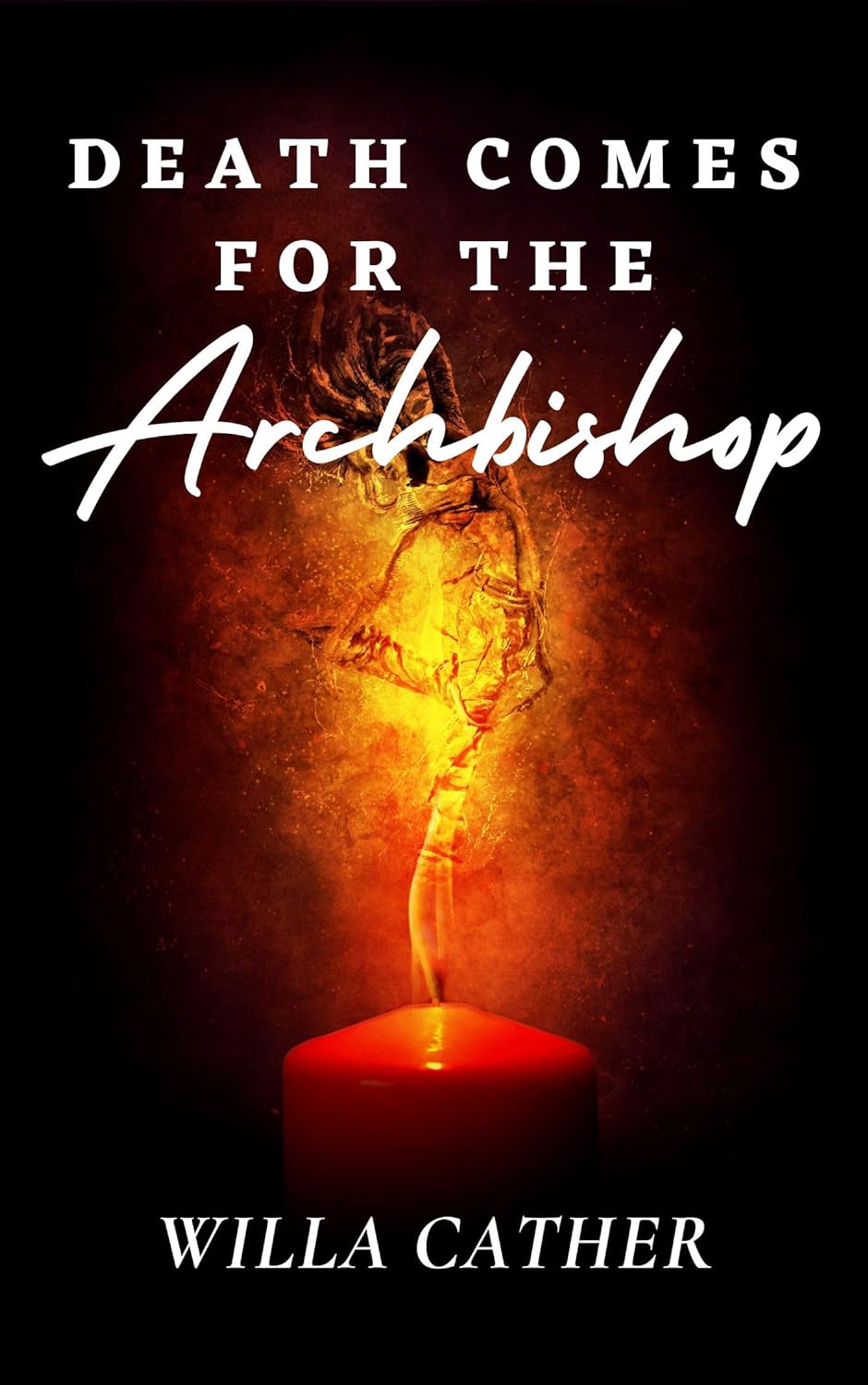
Right off the bat, I can tell you, three of the first four are novels for which I have the deepest reverence: The Great Gatsby, Death Comes for the Archbishop. and An American Tragedy.
I read Gatsby – reread it, actually – so I could present it to a book group in tandem with a contemporary novel. The Double Bind by Chris Bohjalian is a sort of riff on the plot of Fitzgerald’s masterpiece. To say I disliked it would be a colossal understatement. But I had to read it all the way through, in order to successfully do my part for the book group. I was gritting my teeth the whole time.

Needless to say, it was experiences like this that contributed to putting me off book discussion groups.
I’ve never written about Death Comes for the Archbishop, but let me just say that this is a novel of luminous beauty. It takes place in New Mexico, a land that fascinates me. I’ve read it twice and will probably read it again. Just recently I read My Antonia. I enjoyed it also. Cather is a marvelous writer. I highly recommend both of these novels, and also The Professor’s House, which is also a wonderful book discussion choice.
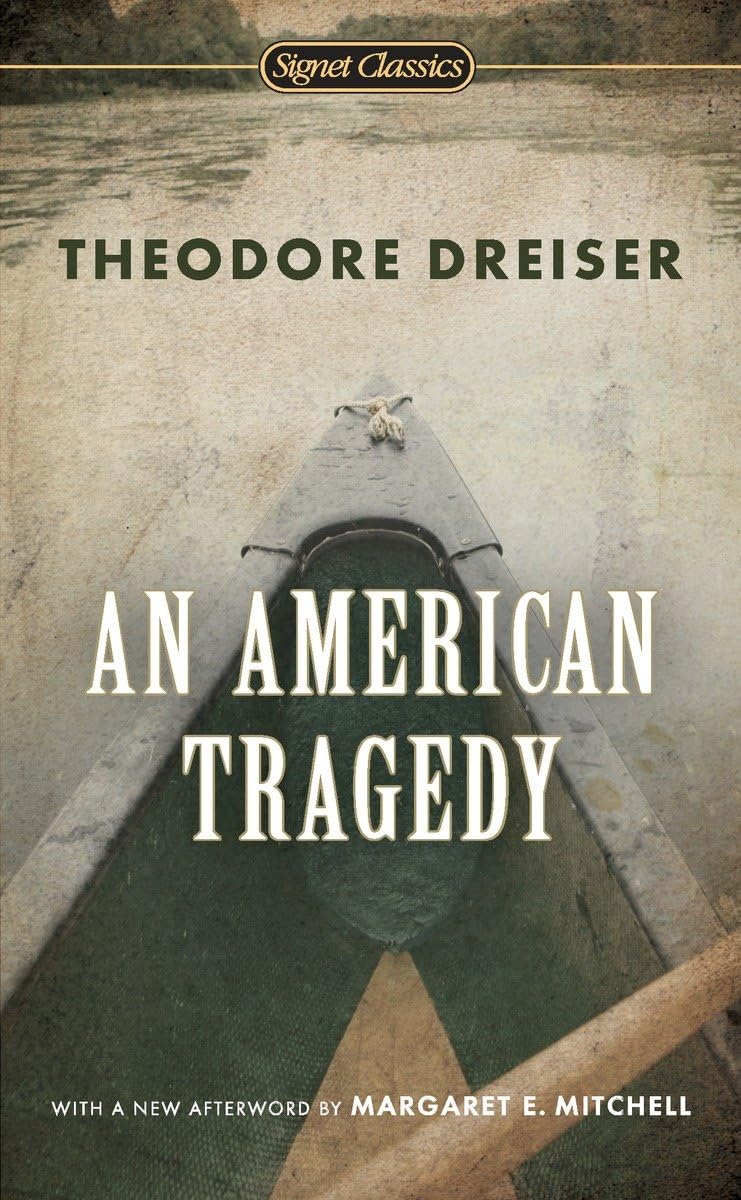
I read An American Tragedy in conjunction with Stranger Than Fiction, a true crime literature course that I presented several years ago to a lifelong learning group. I’d been warned that Dreiser’s prose tended to be somewhat clunky, and so it proved. But oddly enough, that seemed to add to the novel’s raw power. The way the story builds to the moment when Clyde, the hapless protagonist, must decide what to do about the existential dilemma in which he finds himself – well, my heart was pounding; I was filled with dread even though I knew what was going to happen. The fact that the novel is based on an actual occurrence served to make it even more heartbreaking.
The film A Place in the Sun is based on the events recounted in Dreiser’s novel. This is a brilliant film. There’s a scene where Montgomery Clift and Elizabeth Taylor are dancing at a social event, and he confesses his feelings for her. This is what he says:
“I love you. I’ve loved you since the first moment I saw you. I guess maybe I’ve even loved you before I saw you.”
Rarely has a downfall been more poignantly foretold.
The Hunter by Tana French

Tana French brings the rural life of Ireland vividly to life. For me, that was the best thing about this book.
The Hunter is the third work I’ve read by this author. French is known for writing long novels that are crowded with characters and incident. Other writers in this genre have recently been doing something similar. For the most part, this trend does not work well for me. I like mysteries to have a tight, driven quality. This was decidedly lacking in The Hunter – at least, it was for me.
This book is in the nature of a sequel to The Searcher, where we are introduced to Cal Hooper, a retired Chicago police officer who has taken up residence in a village in Ireland with the tongue twisting name of Ardnakelty. He has established a friendship with Trey, an adolescent girl who lives in the village. Trey – real name Theresa – comes from a rather chaotic family situation in which the father has been largely absent. She and Cal operate a sort of ad hoc carpentry shop in which they repair and build furniture; this undertaking is useful and therapeutic for both of them. It’s clear that Trey could use a father figure in her life, and Cal is more than happy to fill that role.
(In addition to a fast moving plot, I like crime fiction that creates interesting, believable characters, even if they’re not necessarily likeable. French at times succeeded in doing this, especially as regards Trey.)
Trouble arrives early on when Johnny Reddy, Trey’s actual father, suddenly reappears on the scene. He’s been up to nobody knows what in London and has returned bursting with news of a scheme that he claims will make the families in the village a pile of money. Cal has his doubts; the reader can’t help but have them as well.
So what was my problem with this novel? Partly it had to do with the structure. There is loads of dialog among the various characters; it consists mainly of discussions of Johnny’s plans but also covers other subjects as well. The plot advances very slowly. I wondered if there was going to be an actual crime at some point. There was, but it was a long time coming. It was, inevitably, a murder; the victim was someone it was very hard to care about.
Meanwhile, we are reminded at every turn of Cal’s fierce devotion to Trey. I’m all for caring for those among us, especially children, who are in extra need of protection. But somehow in this context, I became impatient with these reminders. I might have found this aspect of Cal’s personality to be somewhat inexplicable.
I think that my chief issue with this novel was that it was simply too long. It would have packed much more of a punch, I think, if it had been cut by a third, or maybe even a half. Toward the end, I was having to push myself to get finished. I even briefly entertained the thought of bailing out early, but I hate to do that when I’m so close to the finish line.
Tana French’s novels typically receive rave reviews. This one is no different. Maybe it’s just me. I’m not entirely negative where her novels are concerned. Of the three that I’ve read, I liked Broken Harbor, a novel of the Dublin Murder Squad, the best. This might have to do with my vast preference for police procedurals. At any rate, a review on Goodreads by Emily May pretty well sums up my reaction to The Hunter. (Scroll down and click on ‘2 stars’ to read Emily May’s review of The Hunter.)
After finishing that book, and breathing a deep sigh of relief, all I could think to myself was, I want a mystery I know I will love: one with a fascinating, fast moving plot, intriguing and unpredictable characters, and wonderful writing. Luckily, I knew just where to turn…

A Return to Old New York: The Wharton Plot, by Mariah Fredericks

In this novel, the redoubtable Edith Wharton involves herself in the investigation of the murder of David Graham Phillips a fellow author. Wharton had only met Phillips once; on that occasion, she’d found him rather insufferably full of himself. Nevertheless, she gets drawn in to the inquiry.
Fredericks does a wonderful job of recreating New York City circa 1910. Edith and her husband, the hapless Teddy, have taken rooms in the fashionable Belmont Hotel. Henry James, her friend and colleague, is staying there also. She seeks his advice from time to time, but he’s rather elderly and distracted at that point in time, and also grieving the loss of his brother, the distinguished professor and powerful intellect William James.
There’s a delightful scene early in the narrative in which Edith, walking past a bookstore, is irritated by the sight of the mysteries of Mary Roberts Rinehart prominently displayed in the window, while her own work is nowhere to be seen! (Later on, she phones Rinehart to ask for some advice regarding the solving of murders.)
If you’re getting the impression that I found the actual mystery to be the least compelling aspect of The Wharton Plot – well, you’d be right! Also, I must admit that the casting of historical personages in crime fiction is a trend that I’m rather wary of. But I think Fredericks really makes it work here.
I’m not all that widely read in Edith Wharton’s oeuvre, but I have read – and loved – The House of Mirth and The Age of Innocence. Reading The Wharton Plot made me want to return to her works. I have therefore embarked on a collection of her ghost stories published by New York Review Books. It is simply entitled Ghosts. I’m about half way through it at this point. Th stories range from good to great; ‘great’ would definitely apply to “All Souls,” the first tale in the collection.
While I’m at it, I’d like to recommend The Circular Staircase by Mary Roberts Rinehart, available on Kindle Unlimited for $0.00. For a mystery written in 1908, it’s surprisingly readable and quite engaging.
Speaking of Mysteries…
Here are two that I’ve enjoyed recently:

Three Inch Teeth – That’s a scary title, for sure. Dallas Cates, newly released from prison, vows revenge on those who caused him to lose precious years of his life behind bars. One of those on his hit list is Joe Pickett, a Wyoming game warden and the continuing character in this excellent series. Cates has developed an especially fiendish murder weapon, and it’s a race to the finish to see if Joe and his fellow law officers can stop Cates as he and his confederates rampage through the sparsely populated and stunningly beautiful landscape of the Cowboy State. Another winner from C.J. Box.
In Resurrection Walk, criminal lawyer Mickey Haller commits to the fight to free Lucinda Sanz, imprisoned five years ago for a murder she did not commit. It’s an uphill battle for many reasons; the legal wrangling is excruciating. Haller has his half brother Harry Bosch on hand to act as his investigator. Harry is retired from the LAPD and facing some health challenges, but his cop instincts and his resourcefulness are still intact. Mickey needs them, as well as help from other professionals and witnesses, to win Lucinda Sanz her freedom.

I marvel at Michael Connelly’s ability to grab the read by the throat right at the novel’s outset and not let go until the end. It was just what I needed, and I’m no end grateful!
Burma Sahib by Paul Theroux

After finishing – and hugely enjoying – Leaving by Roxana Robinson, I wanted to jump into another engrossing work of fiction. I felt that it would have to be something radically different from the Robinson novel. As luck would have it, I had recently encountered William Boyd’s glowing review of Burma Sahib. This, I thought, might be just the thing I’m looking for. I was right – it was.
In Burma Sahib, Paul Theroux recounts a fictionalized version of the years spent by Eric Blair in Burma just after the close of the First World War. Blair worked for the colonial police, a job for which he was uniquely unsuited. The novel is a deeply engaging character study. Blair alternates between hating his surroundings and hating himself. In particular, he is repulsed by the ‘sahibs’ who lord it over the Indians and the Burmese in an unthinking and often cruel manner. Socializing in their exclusive clubs, their behavior is boorish. In fact, the British Empire in general does not come off too well here.
Blair himself shares some of the prejudices exhibited by those he professes to detest.. He is not always a likable character, but I was nevertheless fascinated by the way in which Theroux depicts his disastrous missteps coupled with the gradual changes in his personality.
One of those changes has to do with Blair’s growing desire to be a writer. When we first meet him, he is already a compulsive reader and has begun to write poetry. Gradually, surrounded as he is by a mother lode of material, this impulse morphs into an urge to compose stories. All the while, he feels as though he is enacting a part, on the one hand that of a Burma sahib, on the other, that of a shrewd observer at a remove form the action. (No wonder he is so taken by Conrad’s story The Secret Sharer.)
This novel features some truly beautiful descriptions of the exotic landscapes of Burma:
‘They had left the hot glare of the city and its risen dust, the shop signs and hoardings and the clatter of carts, the sullen faces of natives stalled at level crossings, the noses of their bullocks and horses pressed against the horizontal pipe of the barrier. They had entered the jungle and its green shadows and its leaf-scented air, its sheltering trees, the glimpses of green fields and fences, a geometry of gigantic earthen trays of standing water, with rice shoots poking through, his first sight of paddy fields that he’d known only from an illustration in a schoolbook—and those pictures had not revealed the beauty of them he saw now. And bamboo—fountains of it in tight clumps, and some of it dense in thickets, birds nesting in the green striped canes. He smiled when he saw the tree whose name he knew now, the peepul tree, as well as one he wished to know—thick trunk, wide leaves.’
I’ve been reading intermittently the works of Paul Theroux for many years now. He is a prolific writer of both fiction and nonfiction. The fiction I’ve read is The Mosquito Coast (1981) and The Elephanta Suite (2007). Theroux’s nonfiction mainly consists of travel narratives; among those, I’ve read The Great Railway Bazaar (1975), Dark Star Safari (2002), and Deep South: Four Seasons on the Back Roads (2019). I read The Mosquito Coast back when it first came out, and I remember being mesmerized by it. In 1986 it was made into an excellent film, which I’ve long felt that no one knows about but me. I find this perplexing since it had a stellar cast: Harrison Ford, Helen Mirren, and River Phoenix, in a role he played before his untimely death in 1993.
(A more recent version of this novel has been made for TV. I have not seen it.)
So, just who is Eric Blair? As the novel is drawing to a close, he as chosen another first name for his second self. That name is George. Some years later, when he became a published and widely known author, he selected a last name to complete his pseudonymous identity. That name was Orwell.

I heartily agree with the sentiment with which William Boyd concluded his review in The New York Times:
‘The late Martin Amis once declared that “novelists tend to go off at 70. … The talent dies before the body.” Theroux is now in his early 80s and this novel is one of his finest, in a long and redoubtable oeuvre. The talent is in remarkable shape.’
‘He put a familiar face on schizophrenia, a name that still sounded like an ancient curse in modern ears….’ The Best Minds, by Jonathan Rosen

Growing up in New Rochelle, New York, a stone’s throw from Manhattan, Jonathan Rosen and Michael Laudor were best friends. Both of their families inhabited a tightly knit Jewish community; both boys were passionate readers and aspiring writers as well. When it came time to go to college, they both chose Yale. Michael breezed through his undergraduate studies in three years and then went to work for Bain Capital.
It was during this period that troubling symptoms began to emerge: wild mood swings, delusions that overpowered his perception of the real world. Ultimately, Michael was diagnosed with schizophrenia. He sought and received medical help for his condition.
Meanwhile, Michael had applied to a number of law schools. He turned down all but one: Yale. The question was, could he make it through this rigorous course of study while coping with a serious mental illness? He persevered valiantly, all the while being helped by family, friends and professors who believed in him.
In the midst of all of this, he fell in love with Caroline Costello. Called Carrie by those who knew and loved her, she was aware of Michael’s illness but nonetheless loved him and wanted to see him succeed. Eventually they became engaged and moved in together.
The subtitle of this book is A Story of Friendship, Madness, and the Tragedy of Good Intentions. I actually knew how events unfolded before I started reading The Best Minds. An excerpt had been published in a magazine; I believe it was The Atlantic. I wasn’t sure I wanted to read the whole book. For one thing, it was longer than I thought it would be. The early section on Michael and Jonathan’s boyhood in New Rochelle was, in my view, somewhat protracted. But I might have felt that way because I knew of the coming catastrophe and wanted to get to it, and get it over with.
Jonathan Rosen has spoken about this book in public settings and recounted his experience writing it and reliving the story he faithfully, and with considerable anguish, narrates. What follows is an interview that I particularly liked. (It might contain spoilers, so be warned.)
In addition to being a fine writer, Rosen comes across as an empathetic, compassionate, deeply intelligent, and loyal human being – in other words, a real mensch, as both his antecedents and mine would say.
‘For more than a century now, the province of Alberta has seen its future writ in oil….’ Fire Weather by John Vaillant

Having read this book several months ago, I remember few of the particulars. And there were plenty of particulars! So rather than cudgel my poor brain on the subject, I’ve decided to let others do the explaining for me. Click here for the New York Times review.
Let me say first that I found Fire Weather riveting, astonishing, and just plain brilliant. Oh, and harrowing in the extreme. It’s the story of the fire that ravaged Fort McMurray in the province of Alberta, in Canada, in 2016.
‘Since the dawn of the Petrocene Age just a century and a half ago, we have given fire exponentially more opportunities to engage in all those behaviors we seem to emulate and excel at. But like Ariel to our Prospero, fire is a begrudging servant. Selfish and willful, it yearns, above all, for freedom, which it will take at any opportunity and at any cost.’
(Love the Ariel to Prospero analogy. See Shakespeare’s The Tempest.)
This video will give you an idea of what the people of Fort McMurray were dealing with. And they did deal with it – with incredible courage and resourcefulness:
Vaillant’s description of this fire’s unstoppable power were stunning:
‘Combustive energy had drawn people to Fort McMurray in steadily increasing numbers over the course of a century, and combustive energy was driving them out again, en masse, in a single afternoon. As the people of Fort McMurray made their escape, it was through apocalyptic conditions that recalled the seventh plague in the Bible’s Book of Exodus: “So there was hail, and fire mingled with the hail, very grievous, such as there was none like it in all the land since Egypt became a nation.” There was none like it since Canada became a nation, either: the exodus of May 3 was the largest, most rapid displacement of people due to fire in North American history. It took the form of an unbroken ribbon of vehicles crawling in ranks, like army ants, northward and southward out of the city while fire raged along the highway, in some cases right up to the breakdown lanes. Visible in every rearview mirror was a monstrous plume where their city should have been, as if the city itself had erupted. Many who saw this sight speculated that the entire city was lost. The fire plume, which was growing steadily larger, was actively changing the region’s meteorology. No longer simply a ground-level interface fire, it had become a force of Nature. As temperatures rose past 1,000°F, the air at the smoke column’s center rose ever more rapidly, driving upward, like smoke up a hot chimney. As this superheated air rose higher and faster, it created a vacuum into which cooler air was drawn from all sides at greater and greater velocity. Operating like a recirculating fountain, storm systems this large also generate powerful downdrafts along their outer edges, which, in the case of a wildfire, can cause it to burn even more intensely, like an atmospheric turbocharger.’
A large portion of the second half of Fire Weather is devoted to the subject of climate change. and what it portends for our future on this planet. I think that Vaillant believed that he had to write about this subject, given how closely it is tied to the Fort McMurray disaster.
I’m glad that I read this book. It was an immensely powerful retelling of an event I knew nothing about it. I recommend it highly. As for myself, though, I think I shall not be reading about any other fire-related cataclysms on the near future. This one has stayed with me for a long time.
‘He now wants only to leave, he wants never again to enter the closed chamber of his marriage….’ Leaving, by Roxana Robinson

As the novel opens, Sarah, a divorced woman of sixty years or thereabouts, is leaving an opera house. At the foot of the stairs, she sees a frail elderly woman standing still, completely immobilized by fear. She offers her arm to assist, and together they slowly ascend the staircase. (As I’m reading this I’m saying to myself, She’s writing a novel about my mother!)
On this same occasion, Sarah runs into Warren, an old flame now married, from her youth. He has become, in the intervening years, a fanatical opera lover. What happens next is both inevitable and predictable. I was thinking, Oh no, this tired trope again. But then I remembered the lines from Ecclesiastes:
What has been will be again,
what has been done will be done again;
there is nothing new under the sun.
What makes a situation new is the individuals who are at its center: what they feel, what they do, how they act and react. (And I, like many, should know this, from personal experience.) As the novel progressed, Sarah and Warren became increasingly vivid in my eyes. Their fates became a matter of urgency.
The cover, by the way, is a reference to Carnation, Lily, Lily, Rose, a painting by John Singer Sargent:

This most poetical work plays a small but crucial role in the drama.
( As you may have surmised, the characters in this novel occupy a rather elevated cultural stratum. As an aid to decompression after an extremely stressful experience, two of them launch into a discussion of the novels of Kazuo Ishiguro.)
This novel is certainly about leaving, but questions tantalize: Who is leaving whom? or what? And finally, why? (The title of this post is only a partial answer, and a misleading one at that.) I don’t want to give away any more.
Finally I have to say, that Leaving is the most discussible novel I’ve read in ages. When I finished it, i found myself wanting rather urgently talk to someone about it. The unexpected developments in the plot, the actions of the various dramatis personae, the workings of an unknowable fate….If you read it – and obviously I recommend strongly that you should – please leave a comment in this space. As soon as possible!
 Books to the Ceiling